

A dispatcher's work is not just assigning a driver to a trip. It is keeping reservation details accurate, the operating picture current, and the next person informed when plans change.
Whether you cover the desk yourself, outsource coverage, or train your team, the fundamentals are the same. A reliable dispatcher knows what to check, what to communicate, when to escalate, and how to leave a clear handoff.
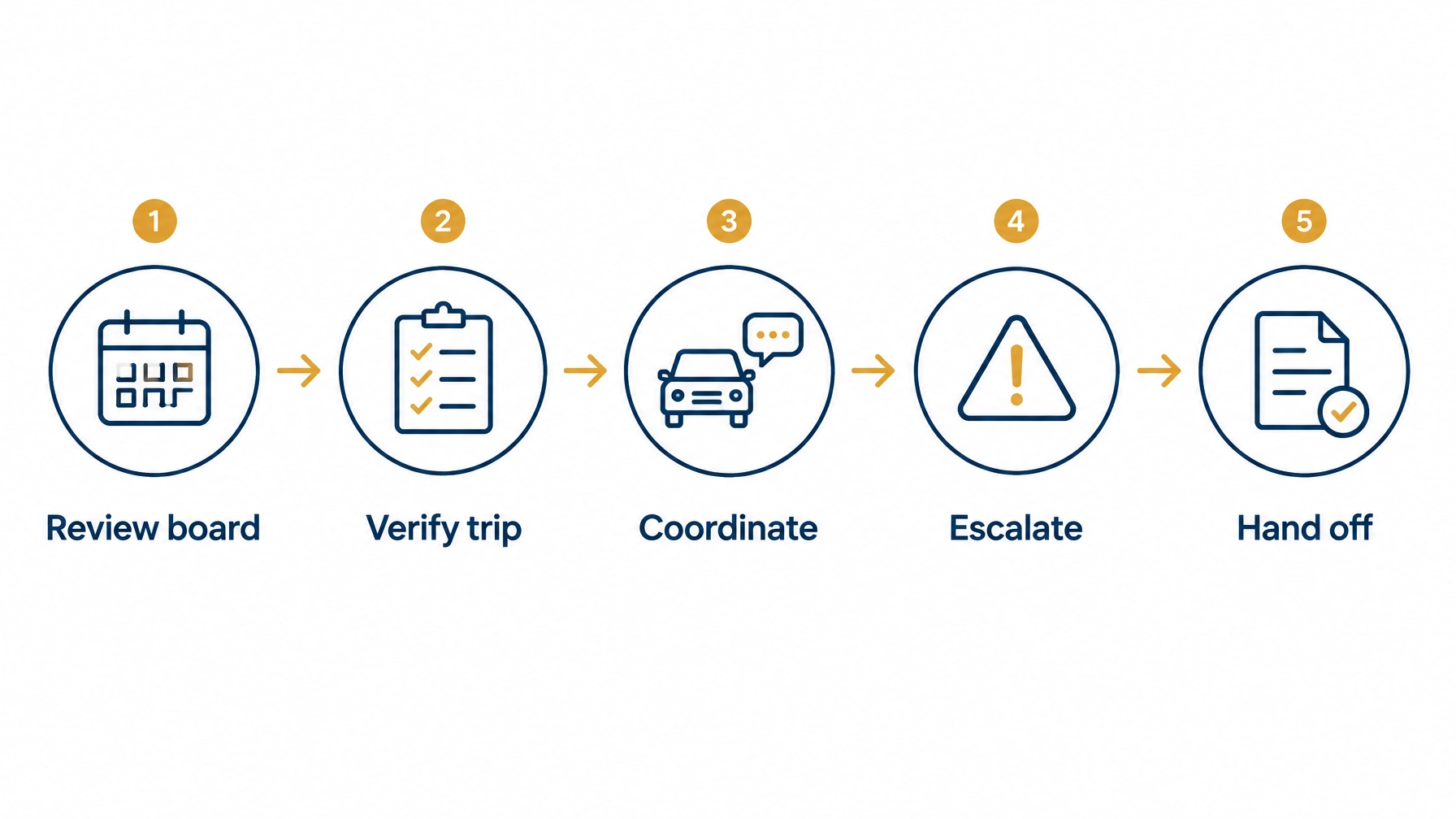
1. How to read and maintain the morning board
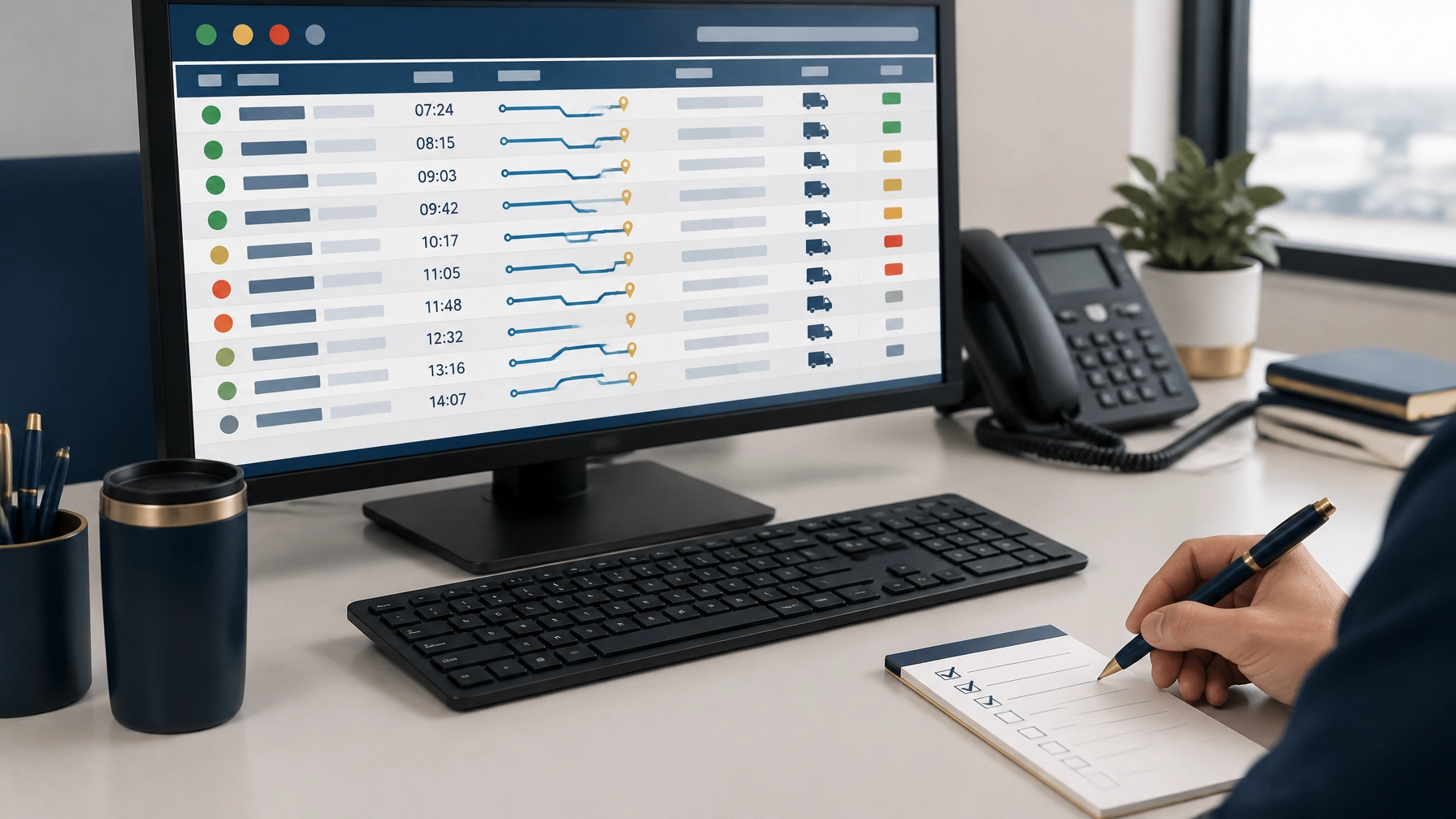
The dispatch board is the working view of the day. It should help you see what is booked, what is covered, and what needs attention, not just show a list of trips.
At the start of a shift, review the full operating picture:
- Trips coming up, including returns and hourly reservations
- Driver and vehicle assignments and availability
- Unconfirmed assignments or vendor arrangements
- Special instructions, time-sensitive pickups, and service requirements
- Open issues from the previous shift
- Schedule conflicts, tight travel windows, or other items that may need attention
As the day moves forward, update the board when a meaningful change happens. If a pickup time, driver, vehicle, or trip status changes, make sure the record reflects it. A change that lives only in a text message or someone's memory can confuse the next person who checks the schedule.
A simple habit helps: after making a change, reread the relevant trip and confirm that the details and status are clear.
2. Which reservation details matter
A reservation is more than a time and an address. It is the information a dispatcher, driver, or vendor needs to deliver the service as booked.
For each reservation, confirm the essentials:
- Who: passenger, booker, and the best contact for questions
- When: service date and local pickup time
- Where: pickup point, destination, and any stops
- What: service type and appropriate vehicle
- How many: passengers, plus relevant luggage or equipment details
- Special instructions: accessibility needs, meeting point, account notes, or other service requirements
- What happens next: confirmation status, outstanding information, and who owns the follow-up
For airport work, clarify the flight details, terminal or meeting location, and whether the pickup is curbside or includes a meet-and-greet. For shuttle work, check the route, timing, and pickup sequence. For an hourly booking, make sure the expected service window and relevant instructions are recorded.
Before confirming, check that the requested service fits the details you have. If something is unclear or conflicts with company policy, ask for clarification rather than filling in the gap with an assumption.
3. How to coordinate drivers and vendors
A useful assignment tells the driver or vendor what they need to know, and gives the dispatcher a way to confirm that the message was received.
Share the trip information clearly, using the communication channel and process your company has established. Include relevant pickup details, timing, vehicle requirements, and special instructions. If an affiliate or farm-out is involved, confirm the arrangement and clarify who is responsible for the passenger communication and any updates.
Do not treat sending a message as the same thing as getting acknowledgment. Where your process requires it, confirm that the driver or vendor has received the assignment and understands the key details.
Communication should also be closed-loop: state what needs to happen, who is responsible, and when an update is needed. For example, if a vendor has not yet confirmed a trip, record that status and identify who will follow up and by when.

4. What to do when the plan changes
Exceptions are part of transportation operations. The dispatcher's job is to identify what has changed, understand what else it affects, communicate clearly, and follow the company's escalation process.
A practical sequence is:
- Confirm the facts. What happened, when, and which trip or trips are involved?
- Check the impact. Could another pickup, driver assignment, or vendor arrangement be affected?
- Take the next permitted step. Follow your company’s procedure and stay within your authority.
- Notify the right people. Keep the relevant driver, vendor, passenger, booker, or manager informed.
- Update the record. Note the current status and any follow-up still needed.
- Escalate when required. Use the designated contact and escalation path for issues beyond your authority or involving safety concerns.
For example, if a driver reports a vehicle issue before a pickup, a dispatcher should follow the company’s process for checking available options, contacting the appropriate manager, and updating affected people. They should not make unsupported promises or assign a vehicle that does not meet the trip requirements just to clear the board.
A helpful procedure makes clear what the dispatcher can decide, what requires approval, who should be contacted, and what information to record. Those details matter most when the situation is not routine.
5. How to leave an end-of-block handoff
A good handoff lets the next person continue the work without having to reconstruct what happened. It should include open trips, unresolved issues, pending confirmations, and the next action for each item.
For every open item, capture:
- The trip or issue involved
- What is known and what has changed
- Who has already been contacted and any response
- The current status
- The next action, its owner, and any deadline or escalation trigger
For example: "Vendor confirmation still pending for the 7:30 pickup; message sent at 6:10; dispatcher on next block to call by 6:30 and escalate to operations if there is no response." This is more useful than "check vendor."
The Follow Up Firm’s guide to clearer dispatch handoffs offers a practical starting point for organizing these notes.
6. How to make the fundamentals stick
Experience helps, but it is not a substitute for a shared process. When key information is passed verbally or stored in one person’s memory, training can vary from one shift to another.
A useful training approach combines written steps with practice. Start with the reservation and dispatch workflow your team actually uses. Show the trainee how to enter and check a booking, update an assignment, communicate a change, and document an unresolved issue. Then use realistic scenarios to discuss what they would do and when they should ask for help.
A dispatcher should be able to demonstrate the work, not just describe it. Can they find a missing reservation detail? Identify a trip conflict? Confirm an assignment? Follow the escalation path? Leave a handoff another person can act on?
Written procedures should explain the normal workflow and the exceptions: who owns each step, what information is needed, and when to escalate. The SOP writing guide covers a practical way to document recurring work without making the instructions harder to use than the task itself.
A reliable dispatcher follows the work through
A well-trained dispatcher keeps trip details current, communicates assignments clearly, responds to exceptions through an agreed process, and leaves the next person with enough context to continue.
Those skills matter whether your team runs the desk internally or you arrange outside support. The Follow Up Firm provides transportation dispatch and operations support and reservation management. Founder Emily Curry brings more than 20 years of hands-on experience in transportation, dispatch, reservations, logistics, and operational management.
For teams that need documented workflows and practical training, the Process & SOP Sprint is a $3,500 one-time project. It includes a workflow audit of one chosen process, three written SOPs with owners and escalation paths, templates and checklists, one training session, and a handoff summary. The scope is confirmed for each engagement; the project does not promise a particular operational result.
Book a Discovery Call to discuss your dispatch workflow and the support that may fit your operation: thefollowupfirm.com/contact.